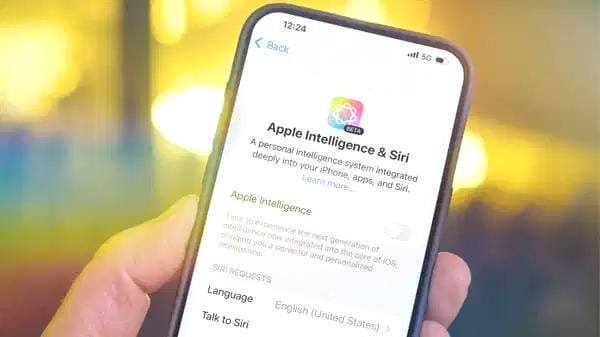
In the fiercely competitive world of artificial intelligence, Apple is making a decisive move to overhaul its flagship voice assistant, siri. For years, Siri has lagged behind rivals like Google Assistant and ChatGPT in understanding context, delivering natural responses, and integrating seamlessly across devices. Now, with the tech giant’s bold partnership with Google’s GeminiModel and a comprehensive overhaul planned for iOS, Apple aims to reclaim its leadership in AI-powered assistance. This transformation signals a new era where Apple’s ecosystem doesn’t just respond to commands but proactively understands user needs, anticipates actions, and maintains strict privacy standards—set to change the way millions interact with their devices.
As the race intensifies, Apple’s upcoming updates are not just incremental improvements—they represent a fundamental shift in how siriis engineered, trained, and integrated. This is more than a fresh coat of paint; it’s a deep technological renaissance driven by innovative AI integration, enhanced natural language processing, and a resolute focus on user privacy. If you’ve been waiting for Siri to catch up with the industry’s best, this is the moment where Apple aims to blow expectations out of the water, bringing in features and capabilities that could redefine voice assistants as we know them.
Understanding the Power Shift: Apple’s Strategic Move with Gemini
At the heart of this transformation is Apple’s collaboration with Google Gemini, a cutting-edge language model renowned for its advanced contextual understanding, extensive training data, and multi-modal capabilities. This partnership isn’t just about borrowing some technology; it’s a strategic move to embed state-of-the-art AIwithin Apple’s carefully curated privacy framework. By leveraging Gemini’s sophisticated language comprehension, Apple intends to enhance Siri’s ability to handle complex, multi-step queries with greater accuracy and fluidity.
Unlike traditional AI models, Gemini offers a deep understanding of nuanced language, enabling Siri to interpret ambiguous commands, maintain context over long conversations, and deliver responses that feel genuinely conversational. However, integrating a model like Gemini is a delicate balancing act. Apple’s core strength has always been user privacy; Thus, the challenge lies in harnessing Gemini’s power without compromising data security. Apple appears to be adopting a hybrid approach—performing most natural language processing locally on devices while only sending anonymized data to external models for more complex tasks. This ensures that user data remains private, even as Siri becomes smarter and more intuitive.
What to Expect in the Upcoming iOS Updates
The rollout iOS 26.4oath iOS 27will be a phased but transformative process rather than an overnight overhaul. Apple plans to introduce Siri improvements gradually, starting with a test phase within its beta programs. The initial iOS 26.4The update will focus on fundamental enhancements, such as better contextual understanding and more natural voice interactions. These improvements will serve as a foundation for the more radical changes planned for iOS 27, when Siri will be reborn with capabilities that rival or surpass existing industry leaders.
In the initial phase, expect to see:
- Improved natural language understanding: Siri will grasp complex, multi-part questions more accurately.
- Context retention: The assistant will remember previous interactions during a session, making conversations more seamless.
- Proactive suggestions: Based on user habits, Siri will propose relevant actions before being asked.
- Privacy-preserving processing: Critical improvements will be implemented locally on devices, ensuring user information remains secure.
With iOS 27, expect Siri to undergo a major reimagination:
- Deeper contextual awareness: Maintaining conversation flow across multiple sessions and tasks.
- Multi-modal inputs: Combining voice, visual cues, and device sensors to enhance command accuracy.
- Proactive assistance: Anticipating needs and suggesting actions proactively, based on a comprehensive analysis of user behavior.
- Third-party integrations: More sophisticated APIs to enable developers to create deeply integrated and personalized assistant experiences.
Balancing Privacy and Power: How Apple Ensures User Data Security
One of the biggest apprehensions with integrating advanced AI models like Gemini is the potential compromise of user data. Apple remains steadfast in its promise to prioritize privacy and security, and this new initiative is no different. The company plans to process most natural language understanding tasks locally on the device, ensuring that sensitive data never leaves the user’s device unless explicitly permitted.
Implementing this hybrid model involves innovative techniques such as:
- On-device inference: Performing real-time AI tasks directly on the iPhone or iPad, reducing latency and data transfer.
- Secure enclaves: Utilizing hardware-based secure zones to process sensitive data safely.
- Data anonymization: Stripping personal identifiers before any information is sent to external servers for complex computations.
- Opt-in controls: Giving users granular control over what data is shared, enabling transparent privacy management.
This approach ensures that Apple can deliver powerful, context-aware AI capabilities without sacrificing its core value— user privacy. By limiting external data exchanges and emphasizing on-device processing, Apple hopes to set a new standard for AI privacy security in consumer technology.
The Impacts on Daily Use and User Experience
This overhaul promises substantial improvements in how users interact with their devices daily. Expect Siri to handle everything from complex multi-step commands—like managing a smart home, booking appointments, or composing detailed messages—with ease and nuance. As the AI understands context better, users won’t need to repeat themselves or rephrase queries repeatedly, leading to a natural, fluid interaction experience.
Features such as proactive suggestions will transform Siri into a true digital assistant—one that anticipates needs based on habits and routines. For example, before you realize you’re running low on coffee, Siri might suggest ordering more, or if it notices you often start work at the same time, it’ll prepare your calendar accordingly.
Accessibility also benefits significantly. Improved speech recognition means that users with speech or hearing impairments can engage with Siri more effectively, making AI assistance more inclusive. The future interface emphasizes natural language, reducing the learning curve for users unfamiliar with rigid command structures.
Opportunities for Developers and New Ecosystem Features
The upcoming AI overhaul opens doors for developers eager to create innovative Siri integrations. Apple will release advanced APIsenabling third-party applications to leverage the new contextual and multi-modal capabilities. This means developers can craft more natural, powerful voice commands for smart home devices, cars, and enterprise applications.
For instance, a fitness app could allow users to ask Siri for personalized workout plans that adapt based on previous activity levels, weather conditions, or diet goals—turning Siri into an essential part of health routines. Similarly, third-party developers can create specialized skills, automations, and workflows optimized for the new AI framework, enriching the overall ecosystem.
Moreover, this evolution offers a chance for subscription-based or premium features. Personalized assistant skills, tailored responses, and context-specific insights could become revenue streams for forward-thinking developers and brands, fostering a vibrant, competitive ecosystem.
Risks, Challenges, and How Apple Plans to Address Them
Despite the promising outlook, integrating advanced AI models like Gemini into Siri presents some formidable risks. The complexity of balancing AI power with user privacyremains the most significant challenge. Any misstep could lead to data leaks, privacy violations, or degraded user trust.
Additionally, AI models are not infallible. The possibility of generating incorrect or misleading responsesmust be addressed through rigorous validation, continuous learning, and oversight. Apple is likely to implement strict validation layers—combining human oversight, contextual error detection, and real-time feedback mechanisms—to ensure Siri’s reliability and safety.
Performance is another concern. Complex AI models require substantial computational resources, which could strain device hardware or introduce latency issues. To mitigate this, Apple will probably optimize Gemini’s deployment by honing on-device models, shared processing between device and cloud, and efficient algorithms that minimize resource usage while maximizing responsiveness.
Furthermore, user adoption hinges on transparency. Apple must communicate clearly how data is managed, what information is shared, and how privacy is maintained—building confidence through clear policies and easy-to-understand controls.
Projected Timeline and Deployment Phases
Apple’s strategic timeline indicates a phased rollout:
- February: Initial release of iOS 26.4, featuring limited beta access with foundational AI enhancements.
- March to April: Gradual expansion with broader beta testing, introducing more complex features and refining performance based on user feedback.
- Autumn 2024: Official launch of iOS 27with full AI capabilities, transforming Siri into a highly intelligent, context-aware assistant integrated deeply into Apple’s ecosystem.
This staggered approach allows Apple to optimize performance, address emerging challenges, and align feature delivery with user expectations. As always, user feedback during beta phases will significantly influence final tweaks, ensuring a polished experience at launch.
How to Prepare for the New Siri Experience
- Join beta programs: Enroll in Apple’s test programs to access early features, provide feedback, and adapt to new interaction patterns.
- Customize privacy settings: Review and adjust Siri permissions, including data sharing options, to maintain control over your information.
- Explore developer tools: If you’re a developer, familiarize yourself with upcoming APIs to create compatible apps and skills designed for the new AI environment.
- Adjust voice command habits: Practice using more natural language and multi-step commands to fully leverage Siri’s evolving capabilities.
Innovations like these aren’t just incremental updates—they represent a paradigm shift in AI-driven assistance, pushing Apple into a front-runner position in truly intelligent, privacy-focused voice interfaces that could set industry standards for years to come.