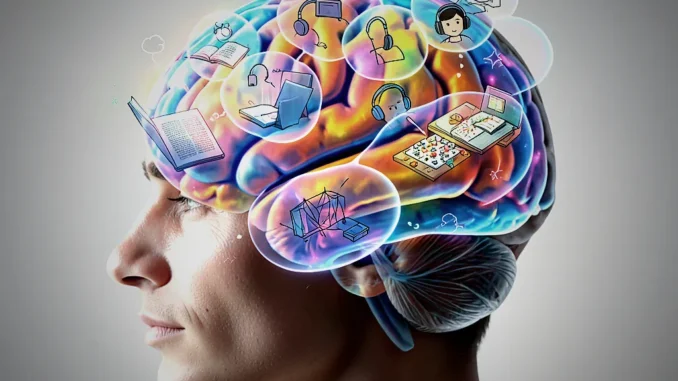
Imagine transforming your entire brain wiring so seamlessly that tasks once thought impossible to perform simultaneously become effortless. Breakthrough neuroscience research now reveals that with enough intensive training, your brain can actually reassign its duties, shifting complex processes from one region to another—freeing up vital resources and boosting multitasking capabilities beyond current limits. This revolutionary finding challenges the long-held belief that the prefrontal cortex (PFC) is a strict, bottleneck hub for all high-level cognitive functions. Instead, it shows that, through persistent practice, your brain can develop alternative pathways, particularly in the temporal cortex, creating a new paradigm for learning and performing multiple cognitive tasks at once. Real-world applications of this discovery are profound. Whether you’re an aspiring musician learning intricate pieces, a professional juggling diverse projects, or a patient recovering cognitive abilities, understanding the neural capacity for reorganization opens new avenues for training strategies that could transform skill acquisition and rehabilitation. Let’s explore the precise mechanisms behind this process, step-by-step, to understand how your brain rewires itself and how you can harness this potential. ## How Intensive Practice Reprograms Brain Circuits Traditional models assert that the prefrontal cortex (PFC)—the brain’s command center—handles executive functions such as decision-making, problem-solving, and task switching. It manages multiple complex processes but has a limited capacity, often leading to cognitive bottlenecks when multitasking. Recent research challenges this view by demonstrating that, with sustained and targeted effort, the brain can delegate certain cognitive tasks to other regions, notably in the temporal cortex—traditionally associated with auditory processing and long-term memory. During intensive repetitive practice, the brain begins to optimize its workload by creating new pathways—effectively transferring responsibilities from the PFC to more automatic processing centers. Here’s how this transformation occurs: 1. Repeated Engagement and Neural Efficiency: Repetitive task performance strengthens synaptic connections in specific neural circuits, making the process more automatic and less reliant on higher-level executive control. 2. Cortical Redistribution: As the task becomes ingrained, the activity shifts from PFC regions to the temporal cortex, which now handles the process subconsciously. 3. Enhanced Long-term Potentiation (LTP): Synaptic connections become more robust, enabling the brain to perform complex tasks with less conscious effort. 4. Parallel Processing Enablement: This neural reorganization allows the brain to perform a second task simultaneously, provided it leverages the now-automatic regions and freeing up PFC resources. ## Practical Steps to Rewire Your Brain for Multitasking Harnessing this neural plasticity isn’t reserved for scientists in labs; you can actively shape your brain with deliberate practice. Here’s a step-by-step guide: Step 1: Identify and Decompose the Task Break down the complex skill into smaller, manageable components. Focus on aspects that can initially be performed sequentially. Step 2: Engage Intensively and Repeatedly Practice each component with high frequency—aim for hundreds of repetitions daily. Consistency is crucial for strengthening neural pathways. Step 3: Incorporate Variability and Contexts Vary the context and stimuli related to the task. Neural circuits become more flexible and adaptable when exposed to diverse situations. Step 4: Use Immediate Feedback Optimize learning by receiving real-time, precise feedback on your performance. Speed and accuracy improvements reinforce the neural changes. Step 5: Gradually Increase Complexity Once small modules become automatic, combine them and introduce more challenging dual-task scenarios. Step 6: Monitor Your Progress with Behavioral and Physiological Indicators Track reaction times, error rates, and, if available, neural activity (via neurofeedback or imaging) to observe the shift from conscious control to automatic processing. Step 7: Train for Dual-task Execution Begin performing two tasks—initially simple, then progressively more complex—while observing performance metrics. Successful multitasking indicates neural redistribution has begun. ## Case Studies: Cognitive Automation in Action Musicians: With disciplined daily practice, mastering a complex piece transitions from deliberate effort to automatic execution, freeing the musician’s PFC for expressive nuances. Language Learners: After extensive practice, pronunciation and vocabulary retrieval occur subconsciously, enabling smoother conversations and simultaneous listening. Athletes: Skill sets like dribbling or precise movements become second nature as their brain shifts control from conscious planning to automatic pathways. Rehabilitation Patients: Targeted therapy can promote neural rerouting, allowing patients to regain lost functions by establishing new, efficient circuits outside damaged areas. ## Limitations and Caution While the potential for neural reorganization is impressive, it is essential to recognize limits. Not all tasks are equally reprogrammable, and individual differences significantly influence outcomes. Neuroplasticity varies with age, prior experience, and genetic factors. Moreover, overtraining without adequate rest can lead to fatigue and diminishing returns. Some automatic processes, if improperly transferred or prematurely, may result in errors or unintended effects. Therefore, tailored approaches supervised by experts ensure optimal and safe neural rewiring. ## Future Directions and Emerging Technologies Advances in neuroimaging and neurofeedback technologies promise even more personalized training protocols. Brain-computer interfaces (BCIs) could soon allow real-time monitoring of neural shifts, providing targeted feedback to accelerate learning. Automated AI-driven training systems might adapt dynamically to your neural responses, optimizing pathways for multitasking, creativity, and learning endurance. ## Summary Intensive, deliberate practice reshapes your brain by redistributing task processing from conscious to automatic regions. This neural flexibility unlocks remarkable multitasking abilities and enhances skill acquisition across domains. Although individual outcomes vary, understanding this mechanism empowers you to design effective training strategies, pushing cognitive boundaries farther than you imagined possible.