
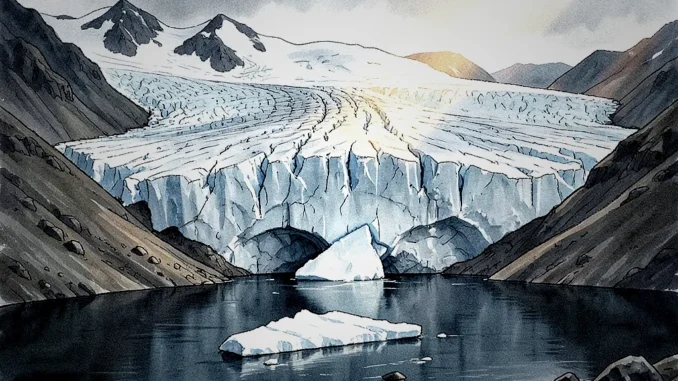
Earth’s cryosphere—the frozen parts of the planet, including glaciers, ice sheets, sea ice, snow cover, and permafrost—is changing rapidly as global temperatures rise. These changes affect sea levels, freshwater supplies, ecosystems, and the stability of mountain and polar regions. Because ice and snow reflect sunlight, their loss can also amplify warming: darker land and water absorb more heat, which can accelerate further melting.
What is happening to glaciers and ice sheets?
Glaciers and the Greenland and Antarctic ice sheets are losing mass as warmer air and ocean water increase melting and weakening ice. When ocean water melts the edges of an ice sheet or an ice shelf that supports inland ice, glaciers can flow more quickly toward the sea. This process contributes to sea-level rise and can reshape coastlines over time.
Mountain glaciers also affect regional water systems. In the Swiss Alps, substantial recent ice loss has changed the timing and volume of meltwater, influencing summer river flows, hydropower operations, tourism, and water management. Communities that depend on glacier-fed rivers may initially experience increased meltwater, followed by reduced flows as glaciers shrink.
How does permafrost thaw contribute to climate change?
Permafrost is ground that remains frozen for at least two consecutive years. It stores large amounts of organic matter that accumulated in cold conditions. When the soil thaws, microbes break down some of this material and release carbon dioxide and methane. These greenhouse gases add to warming, creating a feedback loop: higher temperatures thaw more ground, and thawing can release more greenhouse gases.
Thaw can also damage roads, buildings, pipelines, and other infrastructure because frozen ground may lose stability. The scale and timing of these effects depend on local conditions, including soil type, vegetation, snow cover, and the depth of seasonal thaw.
How does ice loss affect freshwater supplies?
Glaciers in mountain ranges such as the Hindu Kush Himalaya help regulate river flows for communities downstream. Their meltwater can support drinking water, irrigation, and hydropower, especially during dry periods. As glaciers retreat, regions may first face higher meltwater flows and greater flood risk. Later, smaller glaciers may provide less water during the warmest and driest months.
- Near term: Faster melting can increase runoff and contribute to floods or glacial lake outburst floods.
- Longer term: Shrinking glaciers can reduce dry-season water availability and make river flows less predictable.
- Local impact: Changes in water timing can complicate farming, reservoir management, and electricity. generation.
Can cryosphere changes trigger other climate risks?
Yes. Ice loss can raise sea levels, while declining snow and ice cover reduces Earth’s reflectivity, or albedo. Darker surfaces absorb more solar energy, reinforcing regional warming. Permafrost thaw can add greenhouse gases to the atmosphere, and changes in freshwater entering the North Atlantic may influence ocean circulation. The timing and scale of any major circulation change remains uncertain, so monitoring and risk planning are important.
Some cryosphere changes may persist for centuries or longer, even if temperatures later stabilize. Large ice sheets respond slowly, and the carbon released from thawing permafrost can remain in the climate system for a long time. This does not mean every loss is immediately irreversible, but it does mean that delaying emissions cuts can narrow future options.
What can governments and communities do?
Reducing greenhouse gas emissions limits the warming that drives ice loss. At the same time, communities can prepare for hazards and changing water supplies. Effective plans combine emissions reductions with local monitoring and adaptation rather than relying on a single measure.
- Cut emissions: Reduce reliance on coal and other high-carbon fuels, expand clean electricity, and improve efficiency in buildings, transport, and industry.
- Track change: Combine satellite observations with ground measurements of glacier mass, permafrost temperature, snow cover, and river flows.
- Improve warnings: Strengthen local alert systems for avalanches, floods, and glacial lake outburst floods, and make warnings accessible to residents.
- Plan for water shifts: Update reservoir operations, irrigation plans, and water-sharing agreements using current and projected river-flow data.
- Protect vulnerable infrastructure: Assess roads, bridges, buildings, and utilities in areas where thawing ground or changing hazards could undermine stability.
Why does the pace of action matter?
The cryosphere links local changes to global consequences. Glacier retreat can alter water supplies; ice-sheet loss contributes to sea-level rise; and permafrost thaw can add greenhouse gases to the atmosphere. Rapid emissions reductions can limit additional warming, while monitoring and practical adaptation help communities manage impacts already underway. Acting on both fronts gives people and ecosystems a better chance to adjust to a changing climate.







Be the first to comment