
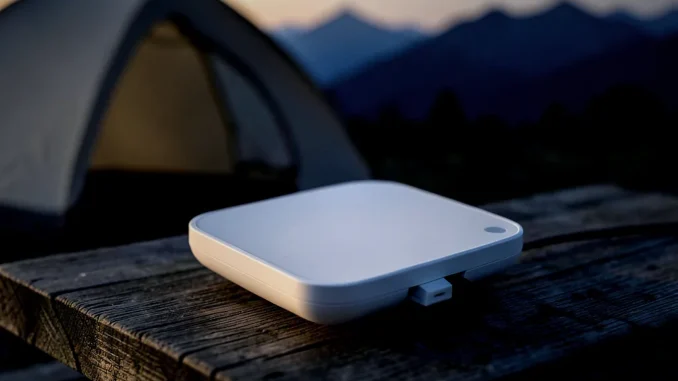
Starlink Mini 2 is a portable satellite internet terminal designed for people who need connectivity away from fixed broadband. Its headline upgrade is a removable 71 Wh battery, which the supplied information says can provide about 4.5 hours of operation. The device also adds Wi-Fi 6, IP67-rated protection, and 60 W USB-C charging, making it better suited to camping, mobile work, and field use.
What is Starlink Mini 2?
Starlink Mini 2 combines a compact satellite terminal with a built-in, removable battery and a wireless router. Unlike a setup that depends on a separate power source, it can operate for a limited period on its own battery. Users can also connect a compatible USB-C power adapter for charging. The device is intended for temporary and mobile internet access rather than as a direct replacement for every fixed home internet setup.
Starlink Mini 2 specifications
- Battery: Removable 71 Wh battery.
- Claimed battery runtime: About 4.5 hours, depending on conditions and usage.
- Charging: USB-C charging at up to 60 W, according to the supplied details.
- Wireless networking: Wi-Fi 6.
- Ingress protection: IP67-rated protection against dust and water exposure under specified test conditions.
- Mounting: A standard tripod mount and fold-out support are described.
Battery runtime is not guaranteed in every situation. Network activity, connected devices, signal conditions, temperature, and power settings can all affect how long a charge lasts.
How long does the Starlink Mini 2 battery last?
The stated runtime is approximately 4.5 hours on a full 71 Wh battery. Treat that figure as an estimate rather than a fixed promise: demanding use, such as several active devices or sustained video calls, may shorten runtime. For longer trips or work sessions, plan to recharge the battery or bring a compatible power source. Confirm charging requirements and battery availability with the seller before purchasing.
What Wi-Fi 6 means for everyday use
Wi-Fi 6 can manage multiple connected devices more efficiently than older Wi-Fi standards in suitable conditions. That can help when a laptop, phone, and tablet share the connection at a campsite or mobile office. It does not increase the satellite connection’s capacity by itself, and actual speeds and latency depend on Starlink service, network conditions, location, and visibility of the sky.
Where Starlink Mini 2 is useful
Camping and travel: The removable battery can provide temporary internet access without requiring a continuously connected external power supply. Position the terminal where it has a clear view of the sky, and use a tripod or stable surface when needed.
Mobile work: A remote worker can connect a laptop and phone for tasks such as email, browsing, or video meetings. For long meetings or a full workday, plan for external power because the stated battery runtime is limited.
Field operations: The IP67 rating and portable design may suit some outdoor work. However, an ingress-protection rating does not make a device indestructible; follow the product’s instructions and avoid treating it as suitable for every exposure or operating condition.
How to set up and manage the battery
- Choose a location: Place the terminal in an open area with as little obstruction to the sky as possible.
- Secure the device: Use the built-in support or a compatible tripod mount to keep it stable.
- Install the battery: Follow the manufacturer’s instructions to insert and lock the removable battery correctly.
- Connect to power when needed: Use a compatible USB-C power adapter that meets the device’s stated requirements.
- Plan for extended use: Check the remaining charge and arrange a recharge or suitable backup before the battery runs out.
Do not assume that batteries can be swapped without interruption or while the terminal is operating. Check the official instructions for safe removal and replacement procedures.
Starlink Mini and Mini 2: stated differences
The supplied information describes Mini 2 as adding an integrated removable battery, Wi-Fi 6, and IP67 protection compared with the first Mini model. Exact specifications can vary by product version and market, so check the official product documentation before relying on a comparison.
- Power: Mini 2 is described as having a removable 71 Wh battery; the first Mini is described as requiring an external power source.
- Runtime: Mini 2 is listed at about 4.5 hours on battery; the first model’s runtime depends on its external power source.
- Wireless: Mini 2 is described as using Wi-Fi 6, while the supplied comparison lists Wi-Fi 5 for the first Mini.
- Protection: Mini 2 is listed with an IP67 rating.
Price and service availability
The supplied details cite a US introductory preorder price of $999 and say the offer Includes one year of Roam Unlimited service for invited customers. Pricing, eligibility, service terms, and availability may differ by country and may change. Check current Starlink terms before making a purchase decision.
Is Starlink Mini 2 right for you?
Starlink Mini 2 may suit campers, travelers, mobile professionals, and field teams who value portable satellite internet and short periods of battery-powered operation. It may be less practical for someone who needs uninterrupted connectivity throughout a full day without access to charging. Compare the device and service costs with your expected usage, power needs, and local availability before choosing it.
Frequently asked questions
How many hours can Starlink Mini 2 run on battery? The supplied specification gives an estimate of about 4.5 hours from its 71 Wh battery. Actual runtime varies with usage and conditions.
Does Starlink Mini 2 support USB-C charging? The supplied information lists USB-C charging at up to 60 W. Check the manufacturer’s compatibility requirements before choosing an adapter.
Is Starlink Mini 2 waterproof? It is described as IP67-rated. That rating indicates protection under defined test conditions; It does not mean that the device is suitable for every kind of water exposure.
Can Starlink Mini 2 replace home internet? It can provide internet access where the service is available, but whether it suits home use depends on location, plan terms, power needs, and the household’s connection requirements.






Be the first to comment