
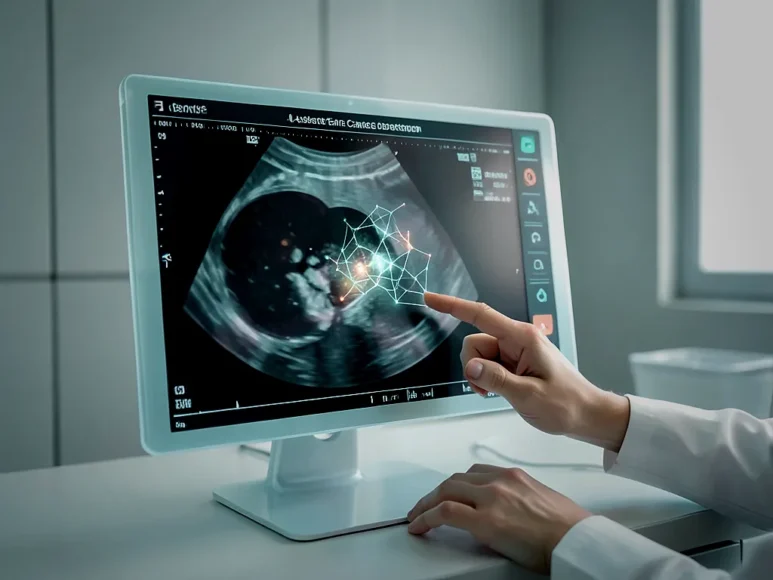
The EDITH trial will examine whether artificial intelligence (AI) can safely read mammograms in place of one of the human specialists who currently review them. The study plans to invite about 700,000 women across England and involve 30 screening centres. Researchers will compare AI-supported screening with current NHS practice, focusing on cancer detection, unnecessary recalls and the impact on clinical workloads.
What is the EDITH trial?
EDITH is a large-scale study of AI in breast cancer screening. It will test whether AI can assess mammograms accurately and safely in real NHS screening services, rather than only in smaller or controlled research settings. The trial will not change routine screening appointments for women who receive an invitation, and taking part is voluntary.
The study is designed to gather evidence about both the benefits and possible harms of using AI. Researchers will assess whether the technology can identify cancers earlier, reduce avoidable follow-up appointments and help manage the workload faced by imaging specialists.
How will AI mammography screening work?
The trial will use two approaches to compare AI readings with human assessments:
- AI assessment before human review: AI will assess mammograms before they are sent to NHS specialists.
- AI assessment after human review: Specialists will first review the images, and AI will assess them afterwards.
Comparing these methods will help researchers understand how AI performs on its own and how well it can support retired. The study will track clinical and safety outcomes over approximately three years.
Who will be invited to take part?
The trial expects to invite around 700,000 women through screening services in England. Under the NHS breast screening programme, women aged 50 to 71 are generally invited for screening every three years. More than two million women attend screening in England each year.
Women invited to EDITH will receive information about the research and can decide whether to participate. Their usual screening process will continue, and joining the study is not compulsive.
What could AI improve in breast cancer screening?
AI systems can learn patterns from large collections of mammograms. They may help identify subtle changes in breast tissue, measure suspicious areas and compare images over time. In a screening programme, these capabilities could help specialists review cases consistently and prioritize images that need closer attention.
If the trial shows that AI is safe and effective, it could contribute to earlier detection, reduce some of the time specialists spend review routine images and help patients reach further assessment more quickly. The study must establish whether these potential gains occur without increasing missed cancers or unnecessary recalls.
What risks will researchers monitor?
Researchers will examine both false-positive and false-negative results. A false positive may lead to an unnecessary recall and further tests; A false negative could mean that a cancer is missed during screening. The trial will also assess whether performance differs between population groups and how AI affects day-to-day screening workflows.
Smaller studies have suggested that AI may improve detection, but results from a large NHS trial are needed to understand how the technology performs at scale and under real-world conditions.
Why is the trial important for the NHS?
Breast cancer is the most common cancer among women in the UK, with about 59,000 cases diagnosed each year. Routine screening detects roughly one-third of these cases, often at an earlier stage when treatment may be more straightforward. The screening program is estimated to help prevent around 1,300 deaths annually.
By testing AI across 30 centres, EDITH will provide evidence about whether the technology can support the NHS screening program while maintaining safety and quality. The findings could also clarify how AI affects specialist workloads and the speed of screening decisions.
Who is funding and running EDITH?
The £11 million trial is funded by the National Institute for Health and Care Research (NIHR). Warwick University, the University of Cambridge and Cambridge University Hospitals NHS Foundation Trust are working together on the project, with four AI companies participating.
How long will the trial take, and what happens next?
The research is expected to run for about three years. Investigators will evaluate detection rates, unnecessary recalls, missed cancers, differences in performance and the practical effects on clinical services. NHS adoption would depend on the results: evidence of safe and effective performance could support gradual integration, while concerns would require further investigation or improvements to the systems.
Why does early detection matter?
Shirley Essex, aged 70, was diagnosed with early-stage breast cancer after a routine mammogram. She received surgery and radiotherapy but did not need chemotherapy. Her experience illustrates how screening can identify cancer before symptoms appear and how early diagnosis may influence the treatment required.
EDITH will test whether AI can help deliver those benefits consistently across a large screening program. Its results will determine whether AI can safely complement or replace part of the current mammogram-reading process.