Revolutionizing Our Understanding of the Milky Way’s Past
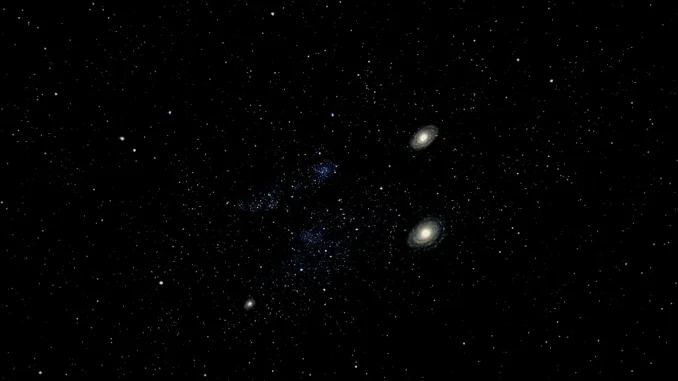
In a groundbreaking study, researchers from Istanbul University’s Department of Astronomy and Space Sciences have identified four previously unknown dwarf galaxy remnants (FO1–FO4) and a fragmented globular cluster remnant (FO5) within our galaxy. This discovery, made possible by the innovative integration of data from the Gaia satellite and SDSS-V, offers a rare glimpse into the Milky Way’s tumultuous history of mergers and cosmic cannibalism. These stellar fossils act as time capsules, allowing us to piece together the complex puzzle of galactic evolution with unprecedented clarity.
Leveraging Diverse Data Sources for a Stellar Archeology
The research team combined three powerful data sets to unravel these celestial relics: the high-precision Gaia astrometric and photometric catalog, SDSS-V’s detailed spectroscopic data, and deep imaging from ground-based telescopes. This eclectic approach provided a rich dataset of approximately 1.4 million stars.
Here’s how they expertly navigated this data:
- Preprocessing: They meticulously corrected for parallax errors and proper motion discrepancies, filtering out noise and unreliable data, thereby honing in on stars with consistent properties that might belong to stellar groups.
- Feature engineering: By deriving chemical abundance ratios, orbital parameters, and velocity components, the team created a comprehensive multi-dimensional dataset, or what they called the “chemodynamic” landscape of the Milky Way.
- Machine learning algorithms: They trained supervised models with previously known structures, then applied unsupervised clustering to identify potential new groupings, leading to the discovery of these stellar remnants.
- Validation: Cross-referencing their findings with spectral chemical signatures and dynamics confirmed the nature of these structures as fossilized remnants of smaller galaxies and globular clusters that merged with the Milky Way.
Deciphering the Mysteries of FO1–FO4 and FO5
The names FO1 nbsp; to FO4 are shorthand for four distinct dwarf galaxy remnants. These structures exhibit unique characteristics, revealing their origins:
- Low stellar density and wide dispersion: FO1–FO4 are expansive, diffuse groups with stars scattered over large areas, indicating they are ancient debris from galaxies torn apart by gravitational forces.
- Distinct chemical signatures: These remnants show chemical abundances that differ from native Milky Way stars, confirming their extra-galactic origin.
- Kinematic evidence: Their orbital paths and velocities trace back to groups of stars that approached and disintegrated into the galaxy, echoing past accretion events.
Meanwhile, FO5 represents a fragmented globular cluster. Its stars display homogeneous chemical patterns but show signs of tidal disruption, suggesting it once belonged to a dense, star-packed cluster that is now dissolving into the galactic halo.
The Significance of These Discoveries for Galactic Evolution
Understanding the formation history of the Milky Way hinges on identifying these stellar remnants. Each remnant adds a piece to the narrative of how our galaxy assembled over billions of years:
- Mapping Galactic Mergers: These discoveries chart the timeline and mass of past galactic mergers, shedding light on the Milky Way’s growth through cosmic cannibalism.
- Tracing Chemical Evolution: The distinct chemical patterns in these remnants help scientists understand the chemical enrichment processes in small galaxies and their contribution to the galactic disk.
- Refining Cosmological Models: By matching the observed remnants with advanced galactic evolution simulations, researchers can better constrain models predicting galaxy formation and the frequency of mergers.
Innovative Use of Machine Learning and ‘Chemodynamics’
This project exemplifies cutting-edge astrophysical research by combining chemistry, dynamics, and artificial intelligence. The researchers introduced and utilized an integrated approach they call chemodynamics:
- Data collection: Chemical abundances ([Fe/H], alpha-elements) and complete three-dimensional velocities are obtained for each star.
- Pattern recognition: Machine learning algorithms, especially clustering models, analyze the multidimensional dataset to find hidden groups without any preconceived notions.
- Confirmation: These groups are validated through spectral analysis and orbital calculations, aligning with theoretical models of stellar debris from mergers.
This methodology showcases how artificial intelligence accelerates discovery, revealing stellar groups that traditional methods might overlook.
Key Numerical Insights and Future Directions
| Aspect | Details |
|---|---|
| Stars analyzed | Approximately 1.4 million |
| Known structures before | Around 15 |
| New structures identified | 4 dwarf galaxy remnants + 1 globular cluster remnant (FO5) |
| Publication in | PASP journal (impact factor ~6.8) |
Charting the Future of Galactic Archeology
To further validate and expand these findings, scientists will leverage upcoming data releases, deeper spectroscopic surveys, and enhanced computational models:
- More detailed spectral measurements: These will sharpen age and formation timeline estimates for each structure.
- Comparison with cosmological simulations: Researchers aim to match observed stellar remnants with predictive models, testing models about galaxy assembly.
- Broader chemical surveys: Extending elemental analyzes will improve the ability to distinguish genuine remnants from coincidental groupings, refining our understanding of galactic chemical evolution.
The Broader Impact of These Discoveries
This pioneering work fundamentally alters our perception of the Milky Way’s history. Each stellar remnant encapsulates the story of ancient galaxies and star clusters, revealing a dynamic rebirth through cosmic mergers. These findings will inevitably inspire both observational campaigns and computational simulations, ultimately leading us closer to a comprehensive narrative of our galaxy’s formation—an intricate tapestry woven from countless dispersed stellar fossils.