

Artificial intelligence could transform work, public services, and economic life over the next two decades. The pace will vary by industry: software may change quickly, while sectors that depend on physical infrastructure, safety testing, and regulation will take longer. The central challenge is not simply whether AI can perform a task, but how quickly organizations can adopt it and help workers move into changing roles.
How will AI change jobs over the next 20 years?
AI is most likely to affect tasks that are repetitive, predictable, and based on digital information. Examples include routine data entry, basic document processing, standardized customer support, and some production-line work. In many occupations, however, AI will change particular tasks rather than eliminate the entire job. A customer-service worker might use AI to draft responses while handling complex or emotionally sensitive cases themselves.
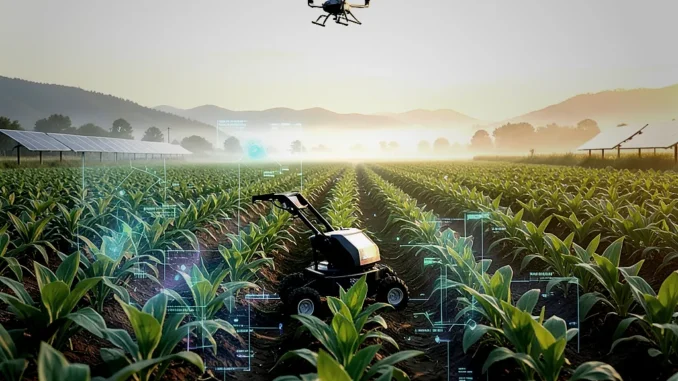
Demand may grow for people who can supervise AI systems, maintain automated equipment, protect digital infrastructure, and apply technical tools in fields such as healthcare, construction, and agriculture. Roles that depend on physical adaptability, interpersonal judgment, or creative problem-solving may also change more slowly, though they will not remain untouched.
- Higher exposure: repetitive assembly, routine data processing, and basic scripted support.
- Changing tasks: bookkeeping, standard analysis, and technical maintenance.
- Potential growth areas: AI oversight, cybersecurity, hands-on care, and creative production.
Why could the transition take two decades?
AI tools can spread quickly, but transforming an entire workplace takes longer. Organizations need suitable equipment, reliable data, trained staff, updated procedures, and systems that protect privacy and safety. Governments also need time to revise rules, while skills education providers must build programs that teach employers actually need.
The timeline will differ by region and industry. A company with modern digital systems may adopt AI sooner than a small business with limited investment capacity. Similarly, healthcare and construction must meet demanding safety requirements before relying on automation for high-stakes work.
Which policies can help workers adapt?
Effective preparation combines training, income support, and clear rules for AI use. Governments and employers can start by identifying tasks likely to change, then offer workers practical training linked to available jobs. Training works best when it includes hands-on experience, recognized credentials, and support for people who cannot afford to pause their income.
- Assess changing tasks: map which duties AI can assist with and which still require human judgment.
- Offer targeted training: teach relevant digital, technical, and interpersonal skills.
- Support job transitions: provide career counseling, placement services, and temporary income assistance.
- Set safeguards: require accountability, privacy protections, and human review for consequential decisions.
- Track results: measure training completion, job placement, wages, and changes in working conditions.
Could AI create an era of greater abundance?
AI could raise productivity by helping people complete some tasks faster and by reducing the cost of certain goods and services. For example, AI-assisted research may help sell review information more efficiently, while better forecasting may help farms reduce waste. Whether those gains lead to lower prices, higher wages, or broader access depends on how organizations distribute the benefits.
Higher productivity alone does not guarantee that every household will benefit. Competition, wages, public services, and tax policy all influence who gains from cheaper production and new revenue. Policymakers can monitor these outcomes and adjust support where workers or communities face concentrated disruption.
What are the main risks of advanced AI?
Key risks include cyberattacks carried out at greater speed, misuse of AI in biological research, privacy violations, and excessive concentration of economic power. Automated systems can also make consequential errors when their data is incomplete or their decisions lack adequate oversight.
Organizations can reduce these risks through secure software development, encryption, independent testing, and clear responsibility for failures. For critical decisions, such as medical treatment or access to essential services, human review and documented appeal processes can help catch errors that automated systems miss.
When could robots work as builders or surgeons?
Robots already assist with some construction and surgical tasks, but assistance is different from full autonomy. Construction automation must handle changing weather, uneven sites, material variation, and coordination with human crews. Wider use will depend on reliable robotics, practical logistics, safety standards, and cost-effective equipment.
In surgery, robotic systems can support intensive with precise movements, but autonomous procedures require extensive testing and clear clinical responsibility. The timeline will depend on approval from trials, regulatory, and the ability to perform safely across different patients and settings. These developments are likely to proceed unevenly rather than arrive everywhere at once.
How can governments and businesses measure progress?
Useful indicators should show whether AI adoption improves outcomes without hiding its costs. Governments and employers can track job transitions, wages, training outcomes, workplace injuries, service quality, and the time needed to detect cyber incidents. Comparing these measures across industries can reveal where workers need additional support and where automation produces reliable benefits.
The next 20 years will bring substantial changes, but the effects will depend on choices made during adoption. Practical training, accountable systems, strong security, and policies that share productivity gains can help communities manage disruption while making useful applications more widely available.








Be the first to comment