
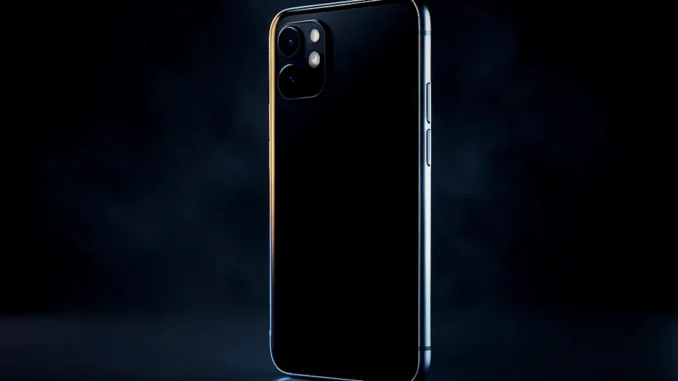
Rumors about the iPhone 20 Pro and iPhone 20 Pro Max point to a major redesign centered on curved displays, a new camera-sensor approach, and Apple’s next-generation A-series processor. These details remain unconfirmed, so they should be treated as speculation rather than official specifications.
What changes are rumored for the iPhone 20 Pro?
The most discussed possibilities are curved display edges, a LOFIC-based camera sensor, and an A21 Pro chip. If Apple adopts these technologies, they could affect screen design, portrait photography, video capture, and on-device image processing. Apple has not confirmed the devices or these features.
- Display: Curved edges could create a more continuous-looking front and allow edge-based interactions.
- Camera: A LOFIC sensor could capture additional light and depth information, depending on its final implementation.
- Processor: A future A-series chip could improve performance and computational photography, though no A21 Pro specifications are confirmed.
How could a curved iPhone display affect everyday use?
A curved display bends towards the phone’s side edges, changing how the screen meets the frame. It can make the front of a device look more seamless and may support gestures or controls near the edges. The practical benefit depends on Apple’s software design: an edge gesture is useful only if it works reliably without triggering accidentally during normal use.
Curved glass also creates engineering trade-offs. The edges can be more exposed to impacts, and manufacturers must carefully manage touch sensitivity, reflections, adhesive, and the connection between the glass and frame. A protective case may cover some of the curved area, so the real-world experience would depend on both the phone’s design and accessory compatibility.
What is a LOFIC camera sensor?
LOFIC stands for lateral overflow integration capacitor, a sensor technology designed to help capture a wider range of brightness in a single exposure. In simple terms, a LOFIC pixel can use additional capacity to retain highlight information that might otherwise be lost when a scene contains both bright and dark areas.
If a future iPhone uses a LOFIC sensor, the potential benefit could include more detail in challenging lighting—for example, preserving bright clouds while keeping a person’s face visible in the same photograph. The results would depend on sensor design, image-processing software, lens quality, and how Apple tunes the camera.
LOFIC should not be confused with a complete Face ID replacement. A camera sensor that improves image capture does not automatically provide the infrared hardware, depth mapping, or security safeguards required for facial authentication. Claims that LOFIC would replace Face ID therefore remain unverified.
Could LOFIC improve iPhone photos and videos?
A sensor with a wider usable brightness range could help a camera retain detail in scenes with strong contrast. Apple could also combine sensor data with computational photography to adjust exposure, color, and local contrast. For video, consistent highlight handling may help scenes that move between shade and bright light, although the final quality would rely on both the sensor and video-processing pipeline.
- Backlit portraits: The camera could preserve more detail in a bright background without making the subject too dark.
- Night scenes: Sensor improvements may help, but low-light results also depend on pixel design, lens aperture, stabilization, and image processing.
- Video: Better highlight information could support more flexible exposure and color adjustments, if the recording format preserves that data.
What might the A21 Pro chip bring?
The rumored A21 Pro has not been announced, and no confirmed performance figures are available. A future Apple processor could improve CPU and graphics performance, reduce energy use, and accelerate machine-learning tasks. Those gains would depend on the chip’s architecture and manufacturing process rather than its name alone.
For photography, a faster image signal processor and neural-processing hardware could help the phone analyze scenes, combine exposures, and apply effects in real time. The most noticeable improvements would likely appear in demanding tasks such as computational photography, high-resolution video recording, and graphics-intensive apps—not necessarily in every everyday action.
What are the main challenges of combining these technologies?
A curved display, a new camera sensor, and a new processor would each require extensive hardware and software testing. Apple would need to balance screen durability, touch accuracy, heat management, camera calibration, battery life, and compatibility with apps and accessories.
Camera hardware also needs software that can interpret sensor data consistently. A new sensor may capture more information, but users benefit only when the phone processes that information into reliable photographs and video without adding delays or excessive power consumption.
Rumored features at a glance
- Curved display: Rumored design change; not confirmed by Apple.
- LOFIC camera sensor: Speculated camera technology that may improve highlight capture; implementation and benefits are unknown.
- A21 Pro processor: Unconfirmed chip name and specifications.
- Face ID changes: No verified evidence establishes that a LOFIC sensor would replace Face ID.
- Launch timing: No official release date has been announced.
Frequently asked questions
Will the iPhone 20 Pro have a curved screen? It is a rumor, not a confirmed feature. Apple has not announced the iPhone 20 Pro or its display design.
What would LOFIC do in an iPhone camera? LOFIC technology can help a camera sensor capture a wider range of brightness. In practice, it could preserve more detail in scenes with bright highlights and dark shadows, depending on Apple’s implementation.
Would a LOFIC sensor replace Face ID? Not by himself. Face ID requires dedicated hardware and secure facial-recognition processing. There is no confirmed information showing that LOFIC would replace it.
Is the A21 Pro chip confirmed? No. The chip name and any expected performance improvements are unconfirmed rumors.
When will Apple announce the iPhone 20 Pro? Apple has not confirmed an announcement date or launch schedule for these rumored models.







Be the first to comment