
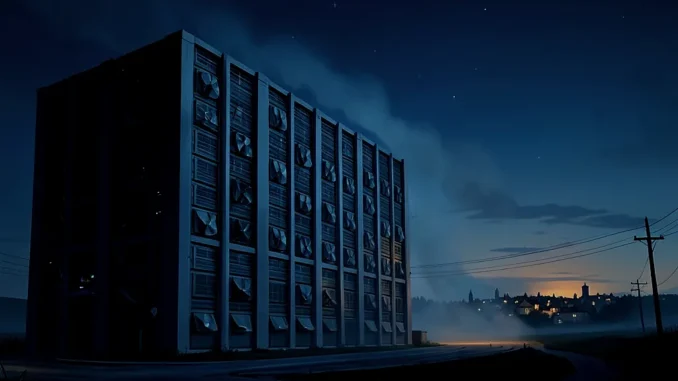
A Harvard-led analysis estimated that 403 of the largest data centers in the United States used 82 terawatt-hours (TWh) of electricity between May 2024 and April 2025. The researchers estimated that the electricity use produced about 25.7 million metric tons of carbon dioxide equivalent. The power demand was comparable to the annual electricity use of roughly seven million homes.
The findings highlight two connected challenges: data centers require large amounts of electricity, and the emissions tied to that electricity depend on how the grid generates power. Recovering the facilities’ waste heat could also help reduce emissions from building heating, provided the right infrastructure is available.
How much electricity do US data centers use?
The study estimated that the 403 data centers examined consumed 82 TWh over a 12-month period. To put that figure in context, it is comparable to the annual electricity use of around seven million US households. The comparison describes the scale of demand; actual household consumption varies by region and home.
Data centers use electricity to run computing equipment and to keep that equipment within safe operating temperatures. Their total energy demand therefore reflects both digital workloads and the systems that support them, including cooling.
How much carbon dioxide do data centers emit?
The researchers estimated emissions of about 25.7 million metric tons of CO2 equivalent for the electricity used by the facilities. These are primarily indirect emissions: the data centers consume electricity, while power plants generate emissions when they burn fossil fuels to supply some of that electricity.
The estimate depends in part on the electricity mix serving each facility. A data center powered by a grid with more low-carbon generation can have lower electricity-related emissions than one drawing power from a more fossil-fuel-intensive grid, even if both use the same amount of electricity.
Why does the grid’s fuel mix matter?
The analysis reports that fossil fuels supplied more than half of the electricity in the mix it assessed. When fossil-fuel generation supplies a large share of demand, each additional unit of electricity can carry a higher carbon footprint. As a result, data-center emissions cannot be understood from electricity consumption alone: analysts also need to consider where and when the electricity is generated.
For example, two facilities that each use 1 TWh annually may have different emissions if one operates in a region with cleaner generation. The same facility can also have different emissions over time as the grid changes its generation mix.
How do the findings compare with earlier estimates?
Professor Francesca Dominici said the estimated emissions were two to three times higher than previous estimates. The study’s scale comparison suggested emissions on the order of those from a US state such as Michigan or a small European country. Such comparisons help explain the magnitude, but they do not mean data centers and those regions have identical energy systems or emissions profiles.
What could 2,000 planned data centers mean for emissions?
Plans for roughly 2,000 additional data centers in the United States could increase electricity demand as facilities come online. The effect on emissions will depend on several factors: how much electricity the new sites use, how quickly the grid adds low-carbon generation, and whether operators improve efficiency and recover waste heat.
The relationship is straightforward: more facilities can increase electricity demand; If fossil-fuel generation meets that demand, emissions can rise. New capacity does not automatically produce the same emissions growth everywhere, because grid conditions and facility designs differ.
Can data-center waste heat be reused?
Yes. Data centers release heat as their computing equipment operates. Instead of rejecting all of that heat into the surroundings, operators can capture it and supply it to nearby buildings or a district-heating network. Reuse can displace some conventional heating, especially where buildings otherwise rely on natural gas or other fossil fuels.
Danfoss has described waste heat as a major underused energy resource. The practical value depends on whether a suitable heat user is close enough, whether the heat can reach the required temperature, and whether a network can deliver it reliably.
How does data-center heat recovery work?
- Capture the heat: Cooling equipment collects heat from servers, often through liquid-cooling systems or heat-recovery equipment.
- Raise or transfer the temperature: Heat exchangers and, where necessary, heat pumps prepare the recovered heat for the receiving system.
- Deliver it to users: Pipes carry the heat to nearby buildings or connect it to a district-heating network.
- Replace other heating: Building operators use the recovered heat for space heating or hot water, reducing the need for another heat source.
Heat pumps are important when the captured heat is cooler than the temperature required by buildings or a network. Their use must be included in a project’s assessment to determine the net energy and emissions benefits.
How much housing could recovered heat serve?
The International Energy Agency has estimated that fully integrating data-center heat could meet about 10% of European residential heating demand by 2030. This is a potential scenario, not a guarantee. It depends on connecting data centers to heat users and building or expanding the networks needed to move heat.
A simple illustrative calculation shows how local projects can be evaluated. If a data center produces 200 gigawatt-hours (GWh) of waste heat annually and a system recovers 60%, it supplies 120 GWh of usable heat. If a home needs 12 megawatt-hours (MWh) of heat per year, then 120 GWh could theoretically cover the annual heating demand of about 10,000 homes, before accounting for network losses and variations in demand.
What limits waste-heat reuse?
- Distance from heat users: A data center far from homes, businesses, or a district-heating network may not be economical to connect.
- Infrastructure costs: Pipes, heat pumps, storage, and network connections require investment, and project returns depend on energy prices and local conditions.
- Temperature requirements: The heat produced may be cooler than the supply temperature buildings need, making heat pumps or other equipment necessary.
- Timing and demand: Data centers may produce heat continuously, while heating demand changes with the weather and time of day. Storage or backup heating may help balance the difference.
- Market rules: Regulations and energy-market arrangements can either support heat sales or make projects harder to develop.
What should a heat-recovery feasibility study measure?
A practical assessment should compare the data center’s heat output with nearby demand and identify the equipment and network required to connect them. It should also estimate the heat’s usable temperature, seasonal demand, delivery losses, heat-pump electricity use, project costs, and the emissions from the heating source the recovered heat would replace.
For instance, a site beside a district-heating network may have a clearer route to reuse than an equally efficient facility in an isolated location. That makes site selection an important opportunity: planners can consider both access to electricity and proximity to potential heat customers.
What does the research mean for data-center planning?
The study, published in Nature, makes the energy and emissions footprint of US data centers more visible. Its estimates also point to the importance of transparent electricity-use data, cleaner power generation, efficient cooling, and site planning that considers nearby heat demand.
Data centers’ emissions can fall when operators reduce energy demand and source electricity from lower-carbon generation. Heat recovery can complement those measures by replacing some fossil-fuel heating. The strongest results will depend on matching the technology to local grid conditions, building demand, and available infrastructure.








Be the first to comment