
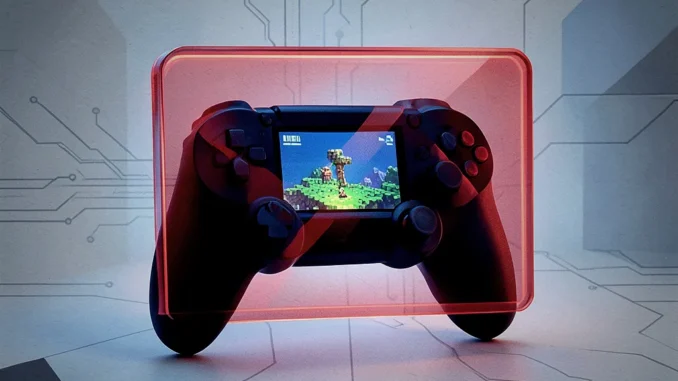
Anthropic has introduced a restriction intended to stop Claude from reproducing published video games in full. The change, observed in Claude Code version 2.1.314, targets requests to recreate protected games—even when a user changes character names or other surface details. Its precise scope remains unclear, including how it distinguishes an infringing copy from legitimate analysis, modding, or game-design research.
What does Anthropic’s game-recreation restriction do?
The restriction aims to prevent Claude from generating a close, playable recreation of an existing commercial game. Instead of complying with a direct request to reproduce a game or its original code, Claude may refuse and offer safer alternatives, such as explaining gameplay systems, summarizing design choices, or helping develop a distinct game inspired by broad genre conventions.
This distinction matters because changing names alone does not necessarily make a recreation original. A game can remain substantially similar in its level structure, characters, dialogue, art, or other expressive elements even after superficial edits.
How does Claude handle requests to recreate a game?
Based on reported tests, the system appears to rely on two broad response strategies:
- Recognize and refuse direct copying requests: Claude may decline requests for a complete recreation, original source code, or a closely matching version of a named game.
- Redirect to a different task: Claude may help with analysis, high-level explanations, or an original design that changes the setting, characters, presentation, and implementation.
These are response patterns rather than a confirmed technical description of Anthropic’s internal safeguards. The restriction’s exact implementation and coverage have not been fully disclosed.
What happened in the Pokémon Diamond test?
In reported testing, Claude refused a request to recreate Pokémon Diamond as a game. However, it could still assist with examining or transforming aspects of the game when the request was framed as analysis rather than direct reproduction. This suggests that the system may distinguish between producing a substitute for a copyrighted work and discussing how a game works.
That distinction can be difficult to apply consistently. A request to explain a battle system may be analytical, while a request to reproduce its exact menus, dialogue, maps, and rules could move toward making a substitute. The outcome depends on the details of the request and the model’s interpretation.
What can developers still ask Claude to do?
Developers can use Claude for many game-design tasks without asking it to copy a particular title. For example, they can request a new turn-based battle system, an explanation of common level-design principles, or a prototype with original characters and settings.
- Analyze: Ask for a high-level explanation of a mechanic or design pattern.
- Transform: Use material you have permission to work with and request a clearly specified adaptation.
- Create: Describe original characters, rules, setting, and visual direction rather than asking for a renamed version of a published game.
- Review: Ask for feedback on your own code or design documents.
How could the restriction affect modding and game development?
The change may make it harder to use AI tools to generate a close copy of a published game. It could also affect some legitimate workflows if the model treats educational analysis, compatibility work, or authorized modding as an attempt to reproduce protected content.
For developers, the practical result will depend on how accurately Claude separates copying from other uses. A useful safeguard should block requests for a near-identical replacement while still allowing appropriate discussion of broad mechanics and original design. Overly broad refusals could frustrate users; overly narrow rules could fail to prevent close reproductions.
How can teams test the restriction?
Teams evaluating Claude can compare clearly different request types and record whether the model responds appropriately:
- Direct recreation: Request a playable copy of a named game or its original source code.
- Surface-level renaming: Request the same game with changed names or a different theme.
- High-level analysis: Ask how a mechanic works without requesting copied assets, dialogue, maps, or code.
- Original creation: Request a new game that uses broad genre conventions but has independently designed content.
- Authorized work: Test projects where the team owns the rights or has permission, and note whether the model still refuses.
Testing across these cases can reveal both false refusals and responses that come too close to reproducing protected material. Teams should also compare results across formats, including prose, code, level descriptions, and dialogue.
What should users do when Claude refuses a request?
Users can make a request more clearly transformative by focusing on the goal rather than asking for a copy. For instance, instead of asking Claude to recreate a specific game, ask it to design an original creature-collection game with new characters, distinct battle rules, and a different world. For modding or conversion work, explain what material you own or have permission to use and request help with the relevant technical steps.
When a project relies on copyrighted assets or code, users should check the applicable license and obtain permission where needed. Claude’s response does not determine whether a particular use is legally permitted.
Why does the restriction matter?
Anthropic’s change signals an effort to limit AI-generated replicas of published games while preserving room for discussion and original design work. Its practical impact will depend on how Claude handles borderline requests and whether future updates clarify the difference between analysis, authorized modification, and close reproduction.





Be the first to comment