
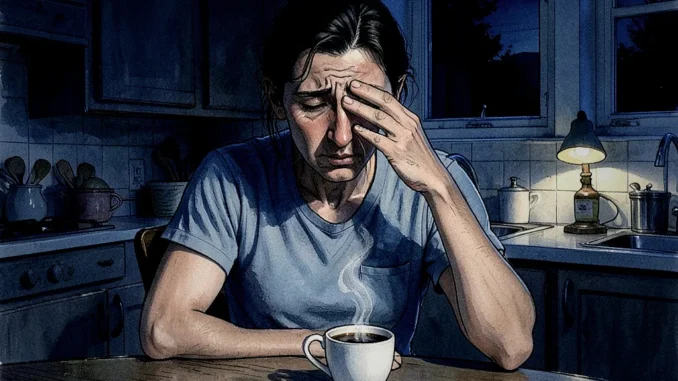
Familial natural short sleep (FNSS) is a rare inherited trait that allows some people to function well after sleeping substantially less than most adults. People with FNSS often sleep about four to six and a half hours a night and wake naturally, without feeling persistently tired. This trait differs from voluntarily restricting sleep: feeling alert after a short night does not, by itself, prove that the body needs less sleep.
What is familial natural short sleep?
FNSS describes a pattern of naturally short sleep that runs in families and is associated with specific genetic variants. People with the trait tend to sleep less without deliberately limiting their time in bed, and may maintain normal daytime functioning. Researchers study FNSS to understand how genes influence sleep duration, brain activity, and resilience to sleep loss.
FNSS is uncommon, and scientists have identified only a limited number of associated genetic variants. A genetic finding alone does not establish that someone can safely sleep less; researchers also consider sleep patterns, sleep stages, and measurable cognitive performance.
How researchers discovered genetic short sleep
Researchers identified families in which several members consistently slept less than average but appeared to function normally. Genetic analysis then helped reveal rare variants associated with this pattern. Follow-up laboratory studies have examined how these variants affect the brain’s sleep and wake systems.
In animal models, introducing certain FNSS-associated variants led to less sleep. Some experiments also reported differences in memory performance or signs of protection in models of neurodegenerative disease. These findings help researchers form hypotheses, but results from animals do not prove that human carriers receive the same health benefits.
How FNSS may affect sleep and the brain
FNSS-associated variants may influence neural circuits involved in sleep regulation, alertness, and memory. Studies of some carriers have suggested that they can preserve important features of sleep, such as deep non-REM sleep, despite spending fewer hours asleep overall. Researchers are investigating whether this reflects more efficient sleep, altered sleep need, or a combination of biological effects.
The mechanisms remain an active area of research. Scientists have not established that every person with a short sleep pattern has the same biology, nor that one genetic pathway explains all cases of FNSS.
Does short sleep benefit everyone?
No. Rare genetic natural short sleep is not a reliable model for the general population. For most people, sleeping regularly too little can impair attention, memory, reaction time, and mood—even when they believe they have adapted.
Genetic studies suggest that sleep duration is influenced by many factors. Common genetic variants usually have small individual effects, while rare variants associated with FNSS may have larger effects in the families where they occur. Some genetic tendencies toward shorter sleep have also been linked with health or mental health risks, so short sleep should not automatically be considered protective.
What sleep-restriction studies show about performance
In controlled studies, healthy adults who regularly sleep only four to six hours often show worsening cognitive performance over time. Attention and reaction speed can decline even when participants report feeling reasonably well. This gap between subjective alertness and objective performance makes self-assessment an unreliable way to determine whether someone needs more sleep.
Some studies have reported smaller performance losses among people identified as natural short sleepers during extended wakefulness. Such findings apply to specific research groups and conditions; they do not mean that ordinary sleep deprivation is safe or that anyone can train themselves to need less sleep.
What research says about short-sleep genes and postpartum psychosis
A study led by researchers at University College London examined genetic data from 343 women with bipolar disorder who had given birth. Participants with a higher genetic tendency toward shorter sleep showed a lower observed risk of postpartum psychosis in that group. The finding may point to a relationship between sleep-related biology and vulnerability during stressful periods.
This result does not show that sleeping less prevents postpartum psychosis. The study involved a specific population, and genetic associations cannot establish cause and effect on their own. Larger studies are needed before researchers can determine whether the association applies more broadly.
How to distinguish natural short sleep from sleep deprivation
Researchers and suddenly look for a stable pattern, objective sleep measurements, and preserved daytime function. A person who feels fine after short sleep may still have measurable impairment, so assessment should not rely on personal impressions alone.
- Polysomnography: Records sleep stages, including REM and deep non-REM sleep, during a sleep study.
- Long-term actigraphy: Uses a wearable movement monitor to track sleep and wake patterns over time.
- Cognitive testing: Measures attention, memory, and reaction time to check for changes in performance.
- Genetic testing: Can identify selected variants, but results need interpretation in the context of symptoms and family history.
No single test confirms FNSS in every case. A sleep specialist can combine medical history, sleep records, and appropriate testing to assess whether a short sleep pattern reflects a natural trait or insufficient sleep.
What to do if you naturally sleep less
If you consistently sleep less than most people and want to understand why, take these steps:
- Track your sleep: Keep a sleep diary and note bedtime, wake time, awakenings, naps, and daytime alertness.
- Seek an objective assessment: Discuss persistent short sleep with a healthcare professional or sleep clinic. They may recommend actigraphy or a sleep study.
- Check daytime function: Ask about suitable tests if you notice problems with concentration, memory, mood, or reaction time.
- Discuss genetic testing carefully: A genetic counselor or qualified clinician can explain what a result can—and cannot—tell you.
- Review health and lifestyle factors: Medical conditions, medications, stress, work schedules, and sleep disorders can all affect sleep duration.
Do not deliberately reduce sleep to imitate FNSS. A rare inherited trait cannot be assumed from a short sleep schedule, and feeling accustomed to less sleep does not rule out impairment.
Could FNSS lead to new treatments?
Understanding FNSS may help researchers identify biological pathways that regulate sleep and wakefulness. In time, this knowledge could support new approaches to sleep disorders or help explain why people respond differently to sleep loss.
Any treatment designed to reduce sleep need would require careful evaluation. Researchers would need to establish long-term effects, assess potential interactions with other medicines, and determine whether benefits and risks differ across individuals and populations. Mimicking a genetic trait with a drug would not necessarily reproduce the full biology of FNSS.
What researchers still need to learn
Important questions remain: Which genetic combinations influence sleep duration without harming health? How do FNSS-associated variants affect long-term risks for metabolic and neurological conditions? Can treatments safely influence the relevant pathways? Answering these questions will require larger studies and long-term follow-up.
Key takeaways about genetic short sleep
FNSS is a rare, biologically influenced pattern in which some people function well with less sleep than usual. It does not explain most short sleepers, and it does not show that sleep restriction benefits the wider population. Researchers assess natural short sleep using patterns over time, objective sleep measurements, cognitive performance, and—when appropriate—genetic information.









Be the first to comment